

The English and Mathematics Departments concluded the final day of the 𝐒𝐜𝐡𝐨𝐨𝐥 𝐋𝐞𝐚𝐫𝐧𝐢𝐧𝐠 𝐀𝐜𝐭𝐢𝐨𝐧 𝐂𝐞𝐥𝐥 (𝐒𝐋𝐀𝐂) on 𝐀𝐥𝐢𝐠𝐧𝐦𝐞𝐧𝐭 𝐨𝐟 𝐂𝐥𝐚𝐬𝐬𝐫𝐨𝐨𝐦 𝐚𝐧𝐝 𝐍𝐚𝐭𝐢𝐨𝐧𝐚𝐥 𝐀𝐬𝐬𝐞𝐬𝐬𝐦𝐞𝐧𝐭 on 𝐀𝐮𝐠𝐮𝐬𝐭 𝟐𝟒, 𝟐𝟎𝟐𝟔, at the third floor of the Administration Building.
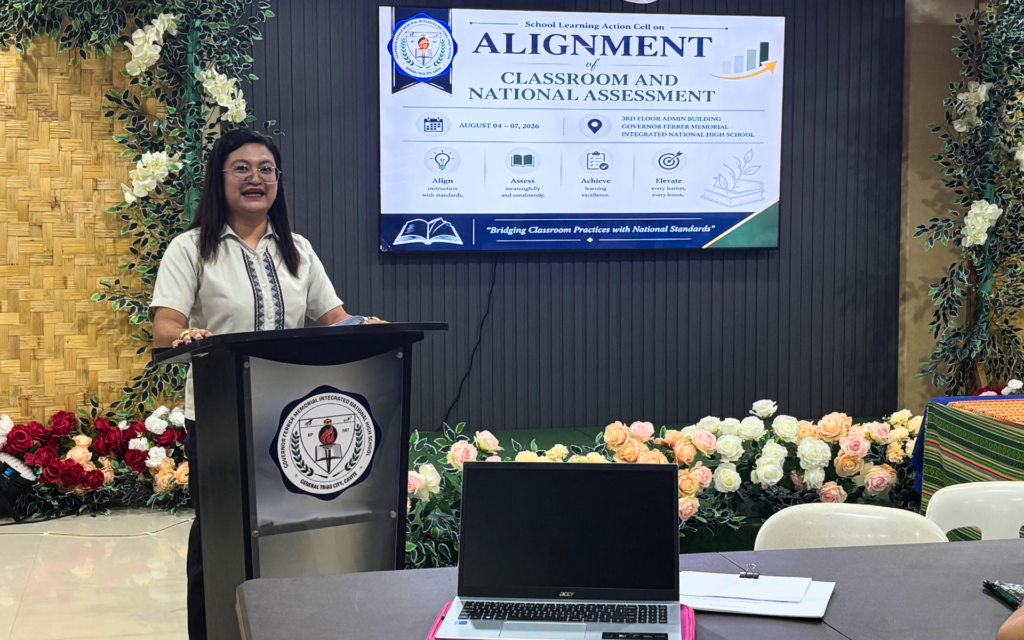
The session brought teachers together for collaborative learning and professional development aimed at strengthening classroom assessment practices and better aligning them with the demands of national assessments.
A key activity was the 𝐈𝐭𝐞𝐦 𝐑𝐞𝐯𝐢𝐞𝐰 𝐚𝐧𝐝 𝐂𝐫𝐢𝐭𝐢𝐪𝐮𝐢𝐧𝐠 𝐒𝐞𝐬𝐬𝐢𝐨𝐧, facilitated by the Master Teachers. Teachers presented and examined sample PISA-like test items designed to assess learners’ ability to apply knowledge, analyze information, solve problems, and respond to real-life situations.
Participants evaluated the items based on the clarity of questions, alignment with learning competencies, level of difficulty, quality of choices, and expected responses. The Master Teachers provided constructive feedback and recommendations to further improve the quality and relevance of the assessment items.
The discussion underscored the importance of moving beyond simple recall and providing learners with meaningful opportunities to develop higher-order thinking, critical analysis, problem-solving, and real-life application of knowledge.
During the closing ceremony, 𝐌𝐬. 𝐉𝐮𝐥𝐢𝐞 𝐕. 𝐁𝐮𝐜𝐮, Master Teacher I, challenged the teachers to translate the knowledge and strategies gained from the SLAC into meaningful classroom assessment practices that can help prepare learners for the National Assessments.
Meanwhile, 𝐌𝐬. 𝐊𝐚𝐭𝐡𝐞𝐫𝐢𝐧𝐞 𝐃. 𝐑𝐞𝐳𝐚𝐫𝐞, Head Teacher VI, delivered the closing remarks, expressing appreciation to the proponents and reaffirming the teachers’ commitment to continuously improving assessment practices.
As the SLAC concluded, the session reinforced a shared goal among educators: to make classroom assessment more meaningful, relevant, and responsive to the skills learners need—not only to perform well in national assessments, but also to navigate real-life challenges.