
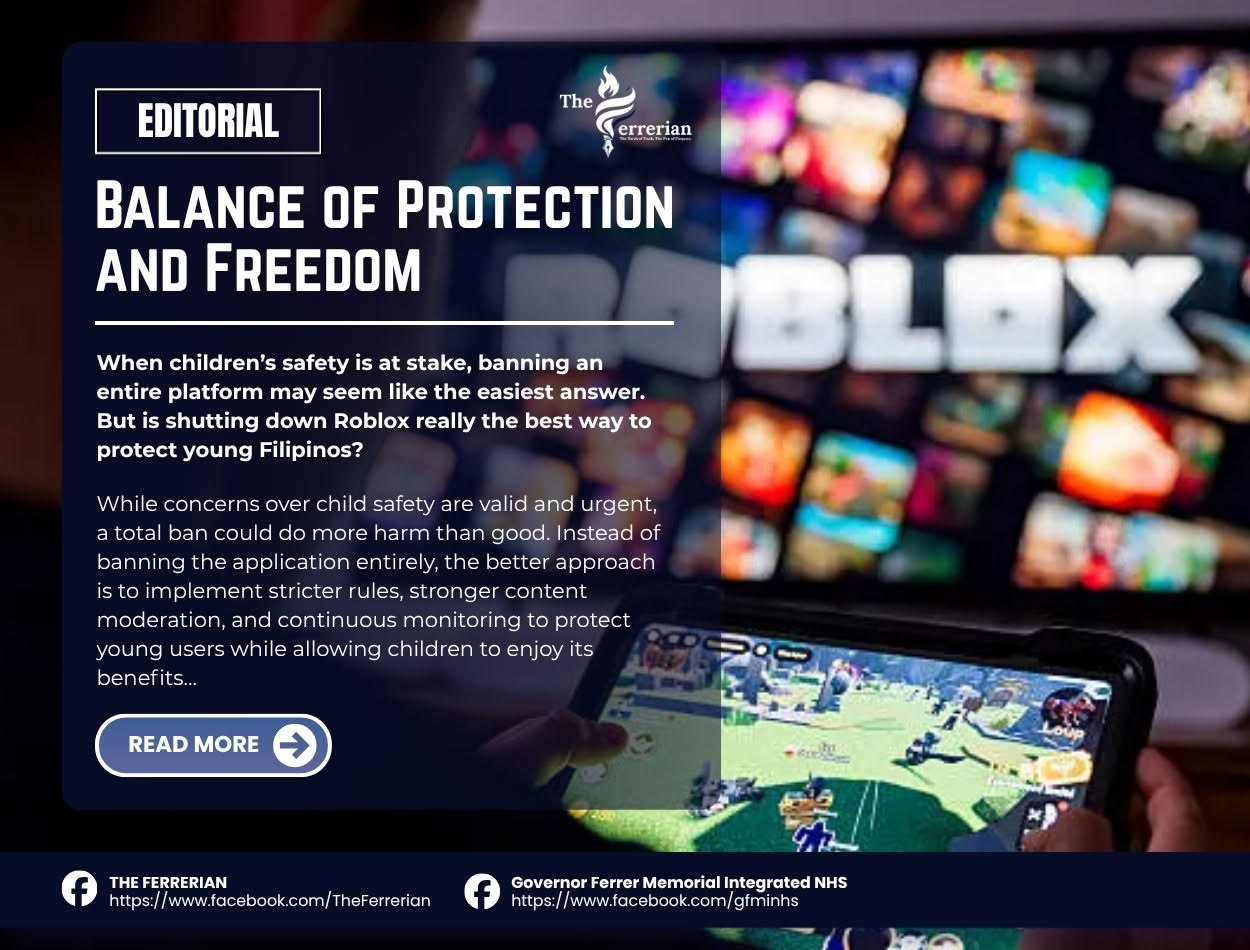
When children’s safety is at stake, banning an entire platform may seem like the easiest answer. But is shutting down Roblox really the best way to protect young Filipinos? While concerns over child safety are valid and urgent, a total ban could do more harm than good. Instead of banning the application entirely, the better approach is to implement stricter rules, stronger content moderation, and continuous monitoring to protect young users while allowing children to enjoy its benefits.
Roblox is far more than just a gaming platform—it is also a space for creativity, learning, and skill development. For many Filipinos, including minors, it serves as an introduction to game design, digital art, and entrepreneurship. Young creators design their own worlds, build experiences, and develop skills that may be valuable in the future. A ban would take away an accessible space for innovation and self-expression.
Supporters of a ban often point to the platform’s safety risks, but banning Roblox entirely will not solve the broader problem. As the Filipino Roblox Developers Association has argued, banning one platform only closes one door; it does not prevent children from moving to another online platform where similar risks may exist. Harmful content and online threats are not exclusive to Roblox—they can be found across the internet.
Beyond its creative potential, Roblox also serves as a vibrant community where different cultures thrive, including Filipino culture. Users create virtual fiestas, sari-sari stores, and local hangouts that celebrate traditions and connect young Filipinos across the country and abroad. During the pandemic, when schools were closed and physical gatherings were limited, online platforms such as Roblox also provided opportunities for young people to stay connected with friends and relatives. When physical meetings were impossible, Roblox became one of the spaces where young people could interact and spend time together.
It is also important to recognize the steps the platform has taken to improve safety. Roblox has committed to reforms involving stronger age verification, age-restricted accounts, and other safety measures intended to provide greater protection for young users. Its efforts to work more closely with Philippine authorities also demonstrate a willingness to address concerns surrounding the platform.
Instead of immediately resorting to an outright ban, government agencies such as the National Privacy Commission and the Cybercrime Investigation and Coordinating Center have focused on engagement, monitoring, and improvements. This approach recognizes an important reality: while risks exist, the platform also provides value to its users. The challenge, therefore, is not simply whether Roblox should exist, but how it can be made safer for the young people who use it.
A total ban, therefore, risks affecting the many responsible users who use Roblox safely and creatively. Many young users turn to the platform to learn, socialize, create, and explore. Removing it entirely would eliminate these opportunities because of problems that may instead be addressed through stronger rules and safeguards.
A far more effective alternative is to strengthen regulations rather than remove the platform altogether. This includes continuous content moderation, clear age-appropriate restrictions, stronger parental controls, and greater public education on safe online practices. These measures can protect children while allowing the platform to remain a space for learning, creativity, and connection.
Parents, educators, authorities, and technology platforms all have a role to play in keeping children safe online. No single law or company update can replace proper guidance, supervision, and communication. When families, schools, government agencies, and platforms work together, we can create an environment where children can explore, create, and learn while being protected from online risks.
Overall, the answer is not simply to ban but to regulate, monitor, and improve. Protecting children should not mean taking away every opportunity for creativity and connection. We can build a safer online environment while still allowing young people to learn, create, and grow. Protection and possibility do not have to be opposites; with responsible regulation, they can exist side by side.
Image Source: https://media.gettyimages.com